Since 1 October 2026, the latest amended return has become the basis for tax rights and obligations. Taxpayers need to review their history of payments, refunds, and carried-forward overpayments before correcting a return.

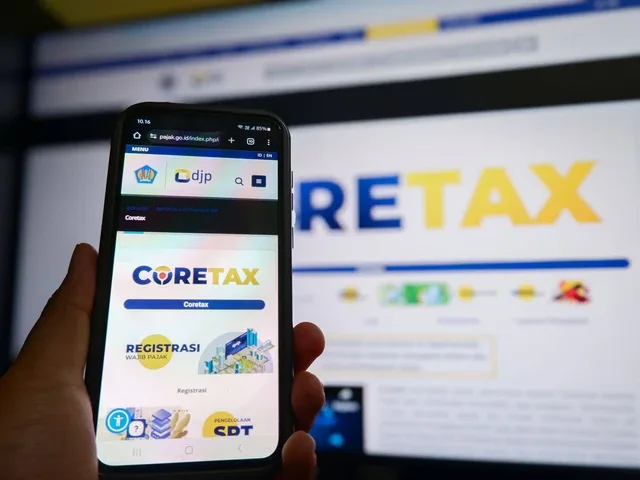
Checking documents and reconciling payments helps ensure that tax return amendments filed through Coretax are accurate.
Withholding slips that have not been taken into account or transactions that have not been recorded can affect tax calculations. If an error is discovered only after the Tax Return (SPT) has been filed, the taxpayer may file an amendment, provided the requirements under the tax laws and regulations are met. Starting 1 October 2026, the mechanism for amending certain tax returns through Coretax has changed. Under Director General of Taxes Regulation No. PER-12/PJ/2026 amending PER-11/PJ/2025, tax return amendments use a replace mechanism that supersedes the delta approach.
Its application still takes into account the type of return, the tax period, and the transitional provisions set out in the regulation. Taxpayers and finance managers need to understand this change before filing an amendment. An amendment can affect the calculation of tax payable or overpaid, the follow-up of applications for refunds of tax overpayments, and the validity of approvals to pay Article 29 Income Tax (PPh) in installments or to defer its payment.
The latest return becomes the reference
The core of the change lies in the status of the amended return. Article 129A provides that the exercise of tax rights and the fulfillment of tax obligations are based on the most recently filed amended return (PER-12/PJ/2026, Article I). The latest return therefore needs to reflect the corrected situation in full. Checking should not stop at the fields that have changed; other related figures also need to be reconciled.
Applying the replace mechanism does not mean that earlier tax payments are erased. When calculating an amended return, Coretax takes into account tax deposits or payments that have been settled for the relevant tax period or year, as well as overpayments that have been refunded through the issuance of an assessment in accordance with the applicable provisions. This mechanism is intended to prevent the calculation of spurious underpayments as well as excessive tax refunds.
According to the Directorate General of Taxes (DJP), from 1 October 2026 the replace mechanism applies to amendments of periodic returns for Article 21/26 Income Tax, Unified Income Tax, VAT and Sales Tax on Luxury Goods (PPN and PPnBM), as well as annual income tax returns for individuals and corporations. Its application still takes into account the tax period and the transitional provisions in PER-12/PJ/2026.
The difference in figures does not explain the whole picture
As an illustration, a tax return originally shows an overpayment of Rp10 million. After correction, the overpayment falls to Rp6 million. Although there is a decrease of Rp4 million, that difference does not automatically indicate the amount of tax the taxpayer must pay or will be billed.
Finance managers still need to answer several questions. Has the earlier overpayment already been refunded? Has it been used as a carry-forward credit? Or is the application still being processed? This example is a conceptual illustration, not an official simulation of completing a tax return. The message is simple: the result of an amendment needs to be analyzed together with the related history of payments, refunds, and carry-forward credits.
The Directorate General of Taxes (DJP) explains that the replace mechanism with calculation rules was designed to address the problem of spurious underpayments that can arise when a return originally showing an overpayment is amended to a smaller overpayment, nil, or an underpayment. In this calculation, Coretax takes into account tax payments that have been settled as well as overpayments that have been refunded through the issuance of an assessment in accordance with the applicable provisions (DJP, 2026).
Pay attention to refund applications in progress
Amending a return that shows an overpayment can also affect a tax refund application. Article 129A sets out the conditions under which such applications are not followed up if they meet the specified criteria, namely applications for the refund of tax that should not have been payable or for preliminary refunds for which no decision letter has yet been issued, as well as refund applications through an audit that has not yet begun. For certain applications that are not followed up, the DJP issues a notification in accordance with Article 129A paragraphs (3) and (4).
Taxpayers need to know the status of their application before submitting an amendment. Assuming that all refunds automatically stop would be just as wrong as assuming that an amendment has no effect on the refund process. Extra attention is needed if the annual return has received approval to pay Article 29 Income Tax in installments or to defer its payment. Under Article 129B, such approval is declared invalid from the time the amended annual return is filed (PER-12/PJ/2026, Article I).
For companies, the consequences need to be discussed between the tax and finance departments. Before filing an amendment, a company should re-evaluate its underpayment or overpayment position, the status of any tax refund applications, and its plans for settling its tax obligations.
Trace changes in carry-forward balances
Carry-forward balances also need to be checked after an amendment. For Article 21/26 Income Tax, the regulation provides for adjustments that can produce positive or negative values and are taken into account in the next regular return in accordance with the provisions (PER-12/PJ/2026, Article 13A as amended).
If the balance in the system differs from internal records, trace the source return showing the overpayment, any amendments previously filed, and how the carry-forward credit has been used. A sequential review helps explain the source of the difference before drawing conclusions.
Reconciliation notes should show the figures before correction, the figures after correction, the reasons for the change, and the supporting evidence. With this documentation, replacement staff or internal auditors can understand the process without having to repeat the tracing from the beginning.
Do not overlook the transitional provisions
The effective date of the rule does not mean that all earlier returns automatically use the same mechanism. The transitional provisions distinguish between returns filed before the rule took effect and subsequent amendments for tax periods from 2025 onward (PER-12/PJ/2026, Article II).
Before filing an amendment, confirm the type of return, the tax period or year, the filing date, and its handling status. The requirements for amendments also need to be checked according to the type of return concerned. For example, under Article 12 paragraph (2) of PER-11/PJ/2025 as amended by PER-12/PJ/2026, periodic Article 21/26 Income Tax returns may be amended provided that the DJP has not yet begun an audit or an open preliminary evidence examination for the tax period concerned.
Precision still matters
Preparing an amendment starts with the books and documents. Match the changed transactions with the relevant withholding slips, payments, refunds, and carry-forward credits. After the amended return has been filed, keep a copy of the return, the electronic receipt, and the calculation documentation as part of the tax records. If the calculation results or balances shown in Coretax do not match the supporting documents, trace the filing and transaction history first. If the difference still cannot be explained, the taxpayer can request clarification through the DJP’s official channels. The filing instructions and calculation examples in the appendix to PER-12/PJ/2026 should be used as the technical reference for the type of return being amended.
Coretax supports the administrative process, but the quality of reporting still depends on the ability to trace the figures. A good amendment corrects the return while leaving a clear trail: what changed, why it changed, and what evidence supports it.
References
Direktorat Jenderal Pajak. (2025). Peraturan Direktur Jenderal Pajak Nomor PER-11/PJ/2025 tentang Ketentuan Pelaporan Pajak Penghasilan, Pajak Pertambahan Nilai, Pajak Penjualan atas Barang Mewah, dan Bea Meterai dalam Rangka Pelaksanaan Sistem Inti Administrasi Perpajakan. https://www.pajak.go.id/id/peraturan/ketentuan-pelaporan-pajak-penghasilan-pajak-pertambahan-nilai-pajak-penjualan-atas-barang
Direktorat Jenderal Pajak. (2026). Peraturan Direktur Jenderal Pajak Nomor PER-12/PJ/2026 tentang Perubahan atas Peraturan Direktur Jenderal Pajak Nomor PER-11/PJ/2025. https://perpajakan.ddtc.co.id/id/sumber-hukum/peraturan-pusat/peraturan-direktur-jenderal-pajak-per-12pj2026
Direktorat Jenderal Pajak. (2026, 30 September). Goodbye skema delta! Coretax kini terapkan skema replace mulai 1 Oktober 2026 (PER-12/PJ/2026). https://www.pajak.go.id/id/artikel/goodbye-skema-delta-coretax-kini-terapkan-skema-replace-mulai-1-oktober-2026-12pj2026
Kementerian Keuangan Republik Indonesia. (2024). Peraturan Menteri Keuangan Nomor 81 Tahun 2024 tentang Ketentuan Perpajakan dalam Rangka Pelaksanaan Sistem Inti Administrasi Perpajakan. https://jdih.kemenkeu.go.id/dok/pmk-81-tahun-2024/overview
Kementerian Keuangan Republik Indonesia. (2026). Peraturan Menteri Keuangan Nomor 1 Tahun 2026 tentang Perubahan Keempat atas Peraturan Menteri Keuangan Nomor 81 Tahun 2024 tentang Ketentuan Perpajakan dalam Rangka Pelaksanaan Sistem Inti Administrasi Perpajakan. https://jdih.kemenkeu.go.id/dok/pmk-1-tahun-2026
Republik Indonesia. (1983). Undang-Undang Nomor 6 Tahun 1983 tentang Ketentuan Umum dan Tata Cara Perpajakan, sebagaimana telah beberapa kali diubah, terakhir dengan Undang-Undang Nomor 6 Tahun 2023.
Republik Indonesia. (2022). Peraturan Pemerintah Nomor 50 Tahun 2022 tentang Tata Cara Pelaksanaan Hak dan Pemenuhan Kewajiban Perpajakan. https://peraturan.bpk.go.id/Details/232952/pp-no-50-tahun-2022
Republik Indonesia. (2023). Undang-Undang Nomor 6 Tahun 2023 tentang Penetapan Peraturan Pemerintah Pengganti Undang-Undang Nomor 2 Tahun 2022 tentang Cipta Kerja Menjadi Undang-Undang.