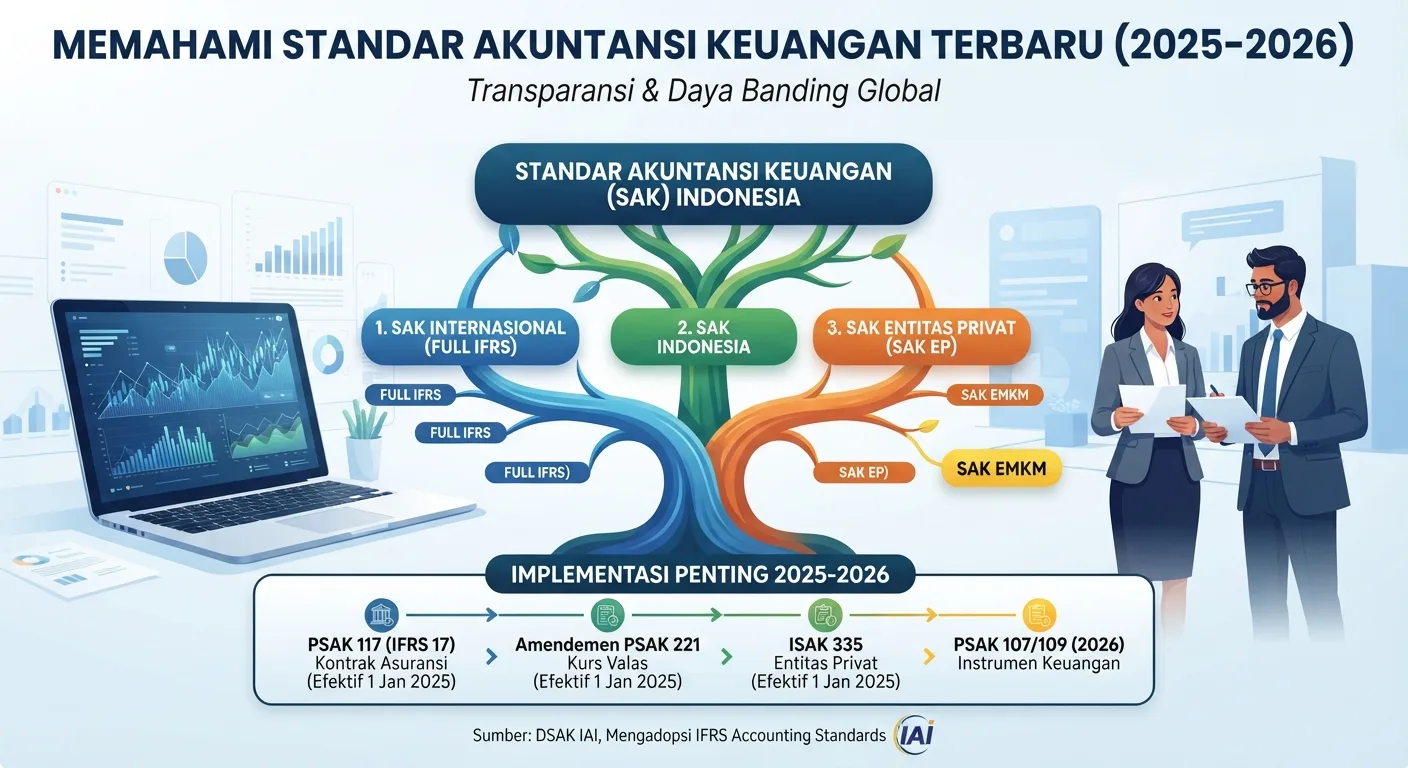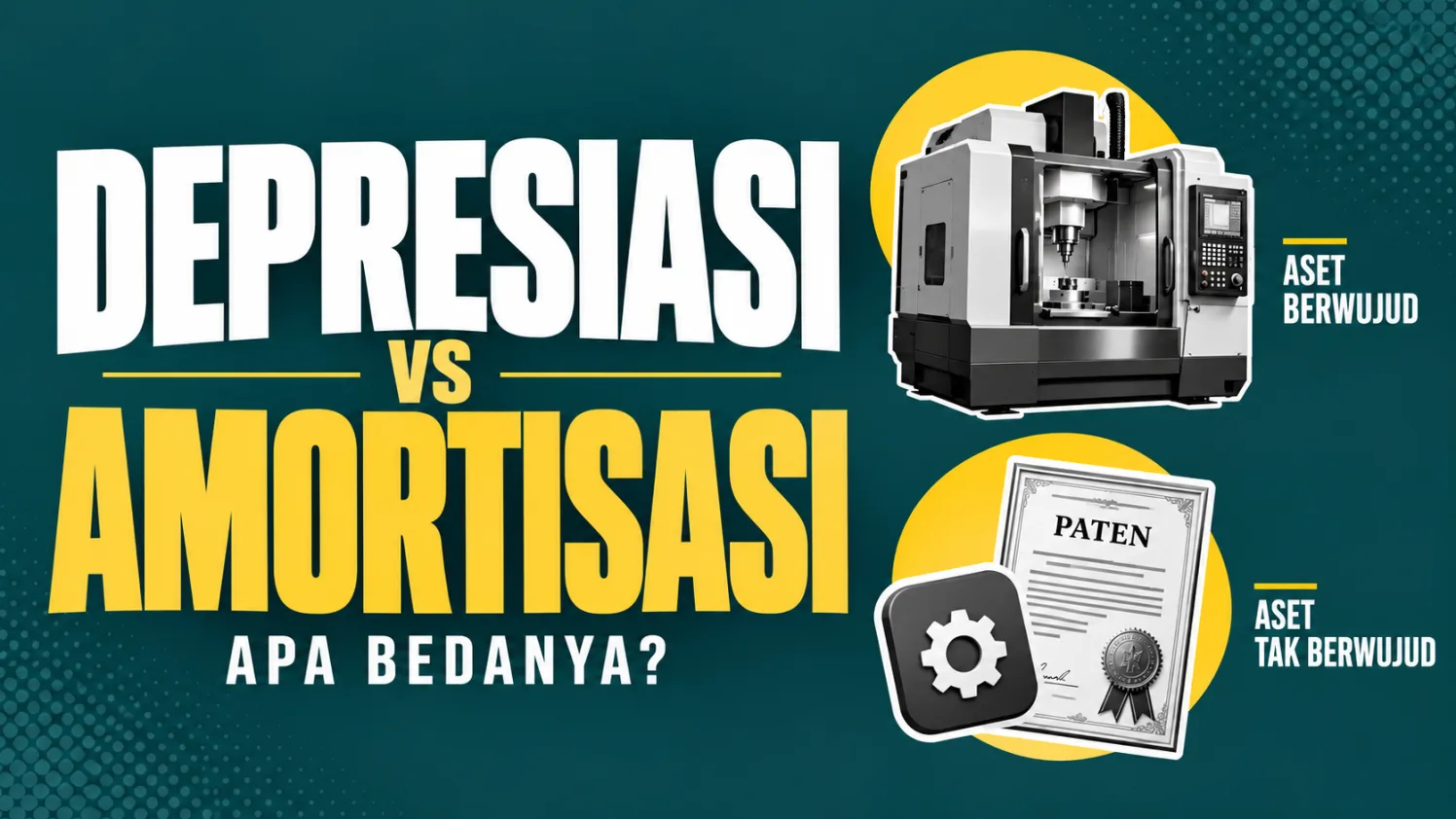
Depreciation and amortization are two terms that come up very often in accounting, yet many students still mix them up. Put simply, depreciation is used to allocate the acquisition cost of tangible assets, such as vehicles, machinery, computers, and buildings, over their useful lives. Meanwhile, amortization is used to allocate the acquisition cost of intangible assets, such as patents, licenses, and certain software, over their useful lives. Both essentially share the same purpose: to allocate the cost of an asset systematically over the period in which the asset provides economic benefits. Under Indonesian accounting standards, property, plant, and equipment are governed by PSAK 216: Property, Plant and Equipment, while intangible assets are governed by PSAK 238: Intangible Assets. The PSAK 216 numbering has been effective since 1 January 2024 as a renumbering of PSAK 16.
So what is the easiest difference to remember? Depreciation = tangible assets, while amortization = intangible assets. For example, a company buys a machine for Rp100 million and expects to use it for 5 years. Using the straight-line method and assuming a residual value of zero, the company will recognize a depreciation expense of Rp20 million per year. Conversely, if the company acquires a software license worth Rp60 million with a useful life of 3 years, that cost can be allocated for accounting purposes as an amortization expense over its useful life in accordance with the applicable provisions. Students also need to understand that the allocation method and period cannot be chosen arbitrarily; they must reflect the pattern in which the asset’s economic benefits are consumed. Depreciation and amortization are therefore not simply “dividing the price of an asset by the number of years”; they are an important part of measuring and presenting a company’s assets and profit.
What about the tax rules? This is often a source of confusion for students, because commercial accounting and tax provisions can differ. For tax purposes, one of the key regulations still used as a reference is Minister of Finance Regulation (PMK) No. 72 of 2023 on the Depreciation of Tangible Assets and/or Amortization of Intangible Assets, which has been in force since 17 July 2023 and revoked several earlier provisions. For tangible assets other than buildings, the tax provisions divide useful lives into Groups 1 to 4, of 4, 8, 16, and 20 years respectively, using the straight-line or declining-balance method as provided. For intangible assets, tax useful lives are likewise grouped into 4, 8, 16, and 20 years. PMK 72/2023 also regulates the treatment of certain software and provides the option of using the actual useful life for intangible assets whose useful lives exceed 20 years, subject to certain requirements.
Conclusion: stop treating depreciation and amortization as the same term. Both are cost allocation processes, but they apply to different types of assets. For accounting students, understanding this difference matters because it affects expenses, profit, the carrying amount of assets, financial statements, and even tax calculations. Furthermore, students need to get used to distinguishing accounting treatment under PSAK from tax treatment under tax regulations. By understanding these differences while still in college, students will be better prepared to handle real accounting cases in the workplace as well as exam questions and case studies.